Advantages and Applications of Touch Screens
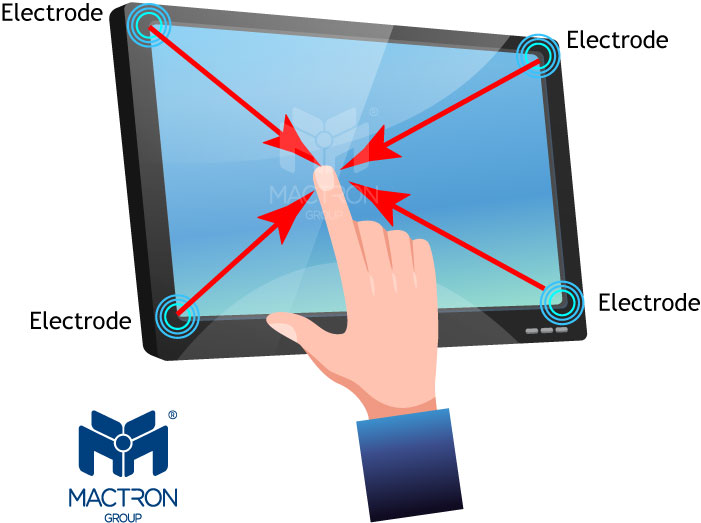
The principle of a capacitive touch screen
A touch screen is an input device that allows users to interact
with a device by directly touching the screen. There are two
common types of touchscreen technologies:
Resistive Touch Screen: A resistive touch screen consists of two
layers of flexible transparent resistive film. When the screen is
pressed by a finger or stylus, it generates pressure at the touch
point, causing the two layers of resistive film to make contact
and form a circuit. The touch panel detects the pressure and
position information and sends it to the processor for
processing.
Capacitive Touch Screen (PCAP): A capacitive touch screen uses
sensing electrodes to create an electric field on the screen. When
a finger touches the screen, it changes the distribution of the
electric field, which is detected by the sensing electrodes and
converted into touch position information. Capacitive touch
screens are divided into surface capacitance and projected
capacitance types.
The advantages of PCAP touch screens
The reason why MACTRON GROUP computers are equipped with PCAP
touch screens is because PCAP touch screens have the following
advantages over resistive touch screens:
Multi-touch Capability:
PCAP touch screens can detect and track the positions and
movements of multiple touch points simultaneously, supporting
multi-finger gestures. This enables users to engage in more
interactive experiences, such as pinch-to-zoom, rotation, and
gesture controls.
Higher Precision and Accuracy:
PCAP touch screens detect touch positions by measuring changes in
capacitance, rather than just pressure changes. Due to this
principle, PCAP touch screens typically have higher precision and
accuracy, enabling more precise touch operations.
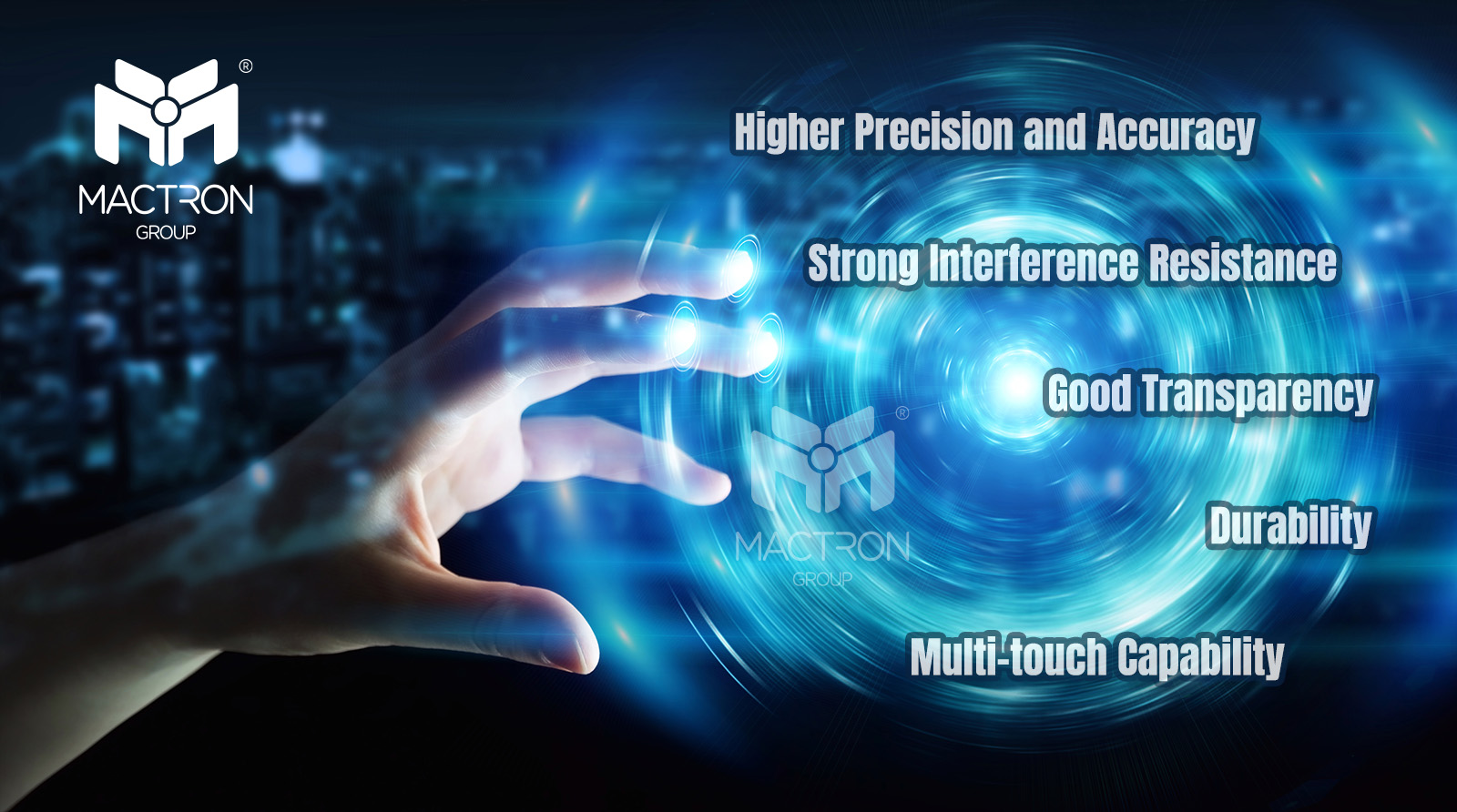
Strong Interference Resistance:
PCAP touch screens have good anti-static interference
capabilities, allowing them to accurately identify touch signals
without being affected by external noise and interference. This
enables stable touch operations in various environmental
conditions.
Good Transparency:
The sensing electrodes of PCAP touch screens are made of
transparent materials, which do not significantly affect the
display effect of the screen, maintaining good visual quality.
This makes touch screens more versatile in design, suitable for
displays of various sizes and shapes.
Durability:
PCAP touch screens are typically composed of durable glass panels
and electrode structures, providing high durability and
scratch-resistant performance. This makes PCAP touch screens
suitable for long-term, frequent use, and resistant to scratches
or damage that may occur during daily use. In summary, PCAP touch
screens have advantages over resistive touch screens in terms of
multi-touch capability, high sensitivity and instant
responsiveness, higher precision and accuracy, interference
resistance, transparency, and durability. These advantages make
PCAP touch screens a common and popular touch technology in modern
devices.
Choose a PCAP touch Panel PC
In summary, PCAP touch screens have advantages over resistive
touch screens in terms of multi-touch capability, higher precision
and accuracy, interference resistance, transparency, and
durability. These advantages make PCAP touch screens a common and
popular touch technology in modern devices.
Check out
MACTRON GROUP(MTG)’s
WCP/
WMP
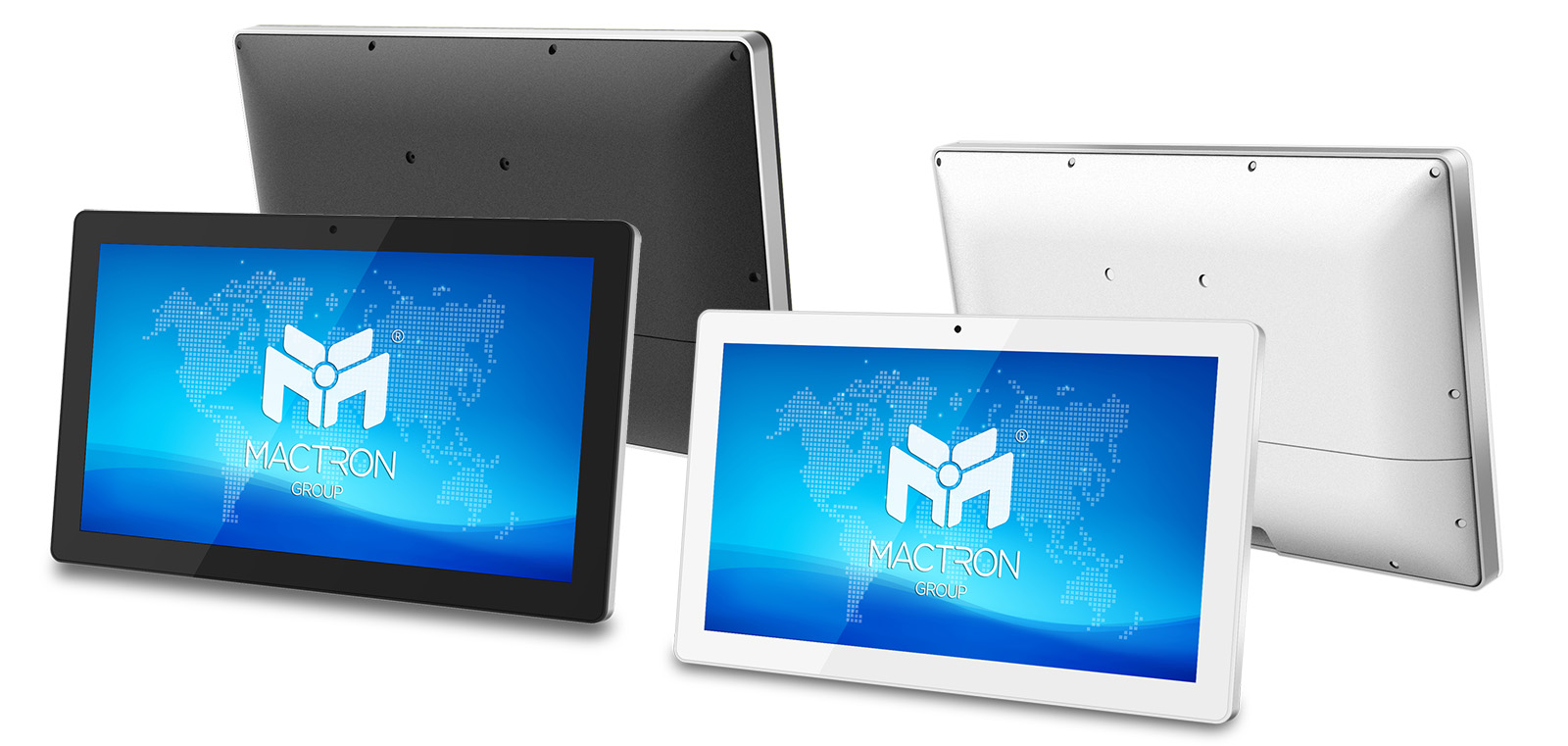
Series. Our Premium Touch Panel PC comes in two different sizes,
featuring exceptional performance and an exquisite chassis, along
with a PCAP capacitive touch screen. It can meet all your
imagination.